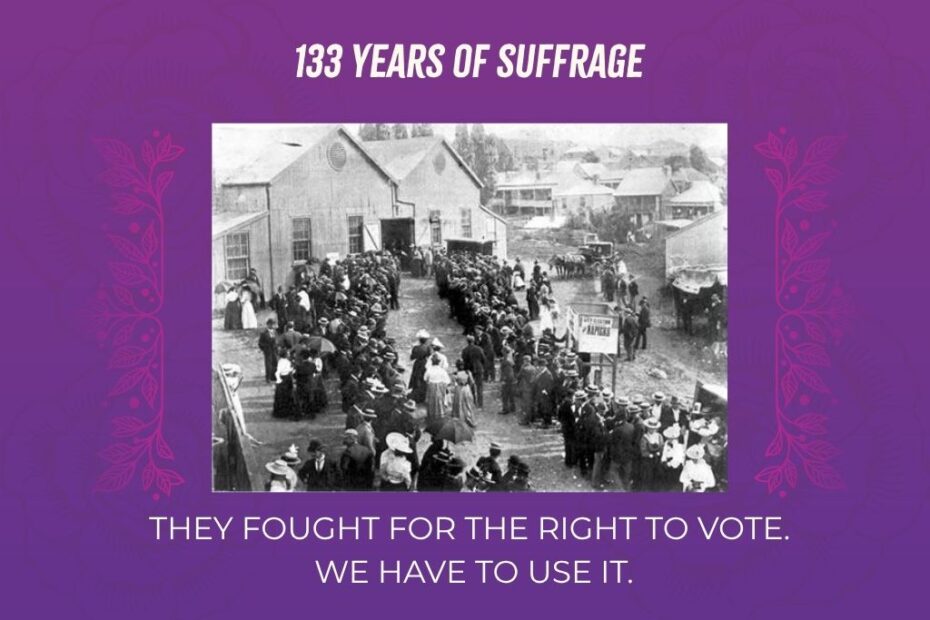
Aotearoa New Zealand holds a proud place in democratic history.
On 19 September 1893, this country became the first self-governing nation in the world where women won the right to vote in parliamentary elections. That achievement did not happen because power was handed over generously. It happened because women organised, persuaded, petitioned, challenged and refused to accept a democracy that spoke about representation while excluding half the population.
That leadership still matters.
Around the world, democratic rights are being contested, weakened or taken for granted. We’re seeing this in Aotearoa New Zealand with new voter suppression laws being passed by the National-led coalition to restrict enrolment periods and early voting. We cannot forget that our rights to vote were won through struggle, and that we must commit to upholding this hard-fought win by making sure that you, your whānau and friends are enrolled and vote in November’s election.
Suffrage is not simply a date on the calendar or a story about remarkable women from the past. It is an obligation.
That is why this year’s November election requires more than warm words about Kate Sheppard, Meri Te Tai Mangakāhia and the generations of women who pushed open the doors of political power.
It requires action: checking enrolment, updating addresses, talking with whānau and workmates, and making a plan to vote.
People must be enrolled to vote by midnight Sunday 25 October. Advance voting starts on Monday 26 October, and election day is Saturday 7 November. Unions and community organisations are rolling out their campaigns to support enrolment and getting out the vote. ActionStation have an excellent education campaign Tāiki Ē! driving enrolment kaupapa, check it out, and join in!
We know that participation in elections is not evenly shared across our population. People who are younger, more mobile, renting, working insecure hours, caring for others, studying, living with disability, or disconnected from “the system” are the people most likely to miss enrolment deadlines or find voting harder to fit around life. These are also the people whose lives are most heavily impacted by decisions made in Parliament: pay, housing, health, education, transport, climate, care, public services and workers’ rights.
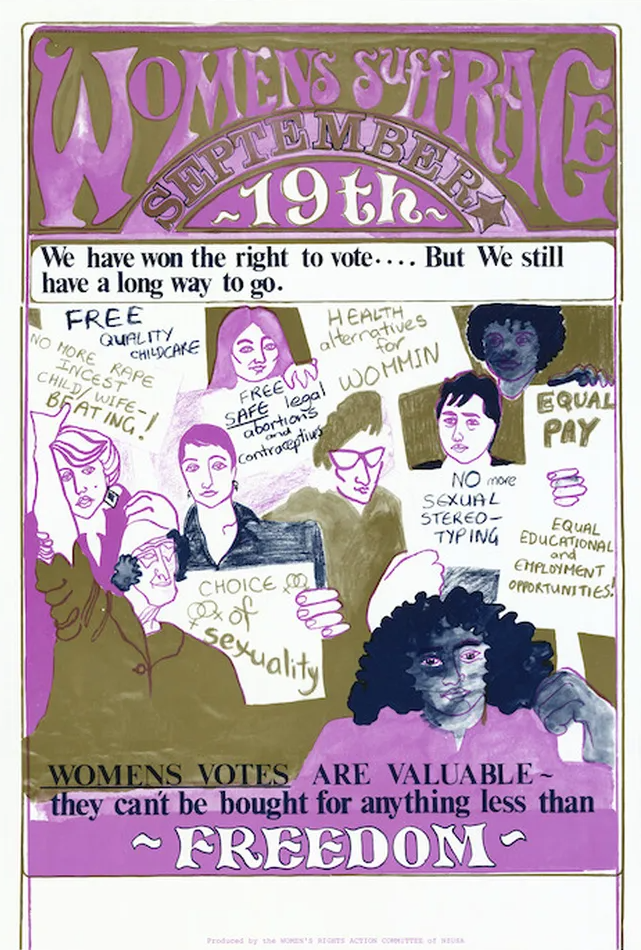
For unions, that makes enrolment and voter turnout core organising issues, not optional extras.
Get out the vote work is democracy in action. It is suffrage work. It is union work. It is the modern expression of the same organising tradition that saw women move through communities with petition sheets, conversations and courage. Our tools are different now, we have enrolment links, text reminders, workplace conversations, rides to voting places, accessible information, advance voting plans, etc, but the principle is the same: no one should be left outside the democratic process because the system was too hard to navigate or because no one asked them to participate.
New Zealand’s suffrage leadership gives us credibility, but it also gives us responsibility. If we are proud to be first, we must also be proactive. We should be the nation where enrolment is treated as collective care, where voting is normalised in workplaces and communities, and where women, Māori, Pasifika, rangatahi, disabled people, migrants, carers and low-paid workers are actively supported to have their say. Union members can help make that real by checking in with colleagues, sharing enrolment reminders, making voting plans in the workplace, and making sure our democracy reaches the people who keep our public services running.
So, this Suffrage Day let the commemoration become a checklist. Check www.vote.nz to make sure you’re enrolled, your address up to date and check in with the people around you. Make a voting plan, remind everyone you know and offer practical support to participate.
The women who won the vote did not campaign and organise for democracy to sit unused. They organised so that ordinary people could shape the future. In November, the most practical tribute we can pay them is to enrol, organise, talk to our workmates and vote.