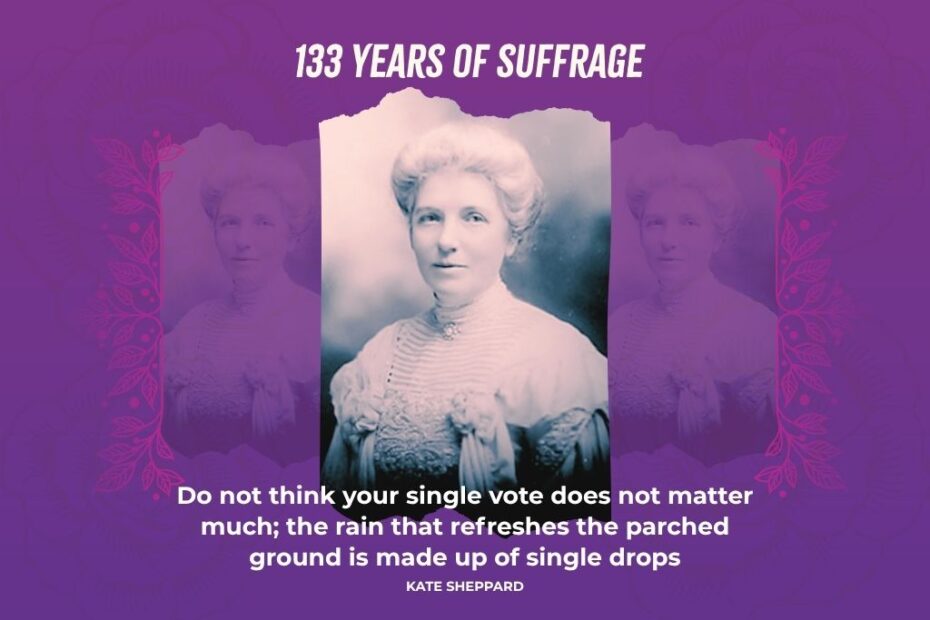
Every Suffrage Day (19 September), Kate Sheppard is rightly remembered as the organiser whose discipline, courage and political imagination helped change the course of New Zealand history. But if we leave her safely framed as a portrait from the past, we miss the most important part of her legacy: Kate Sheppard was not asking women to be included politely in the margins of public life. She was insisting that democracy itself was incomplete while half the population was excluded from shaping it.
Sheppard’s achievement was not accidental. It was built through organising: meetings, pamphlets, letters, petitions, persuasion and persistence. As a leading figure in the Women’s Christian Temperance Union, she helped turn women’s suffrage from a radical demand into a national movement. The 1893 petition, signed by nearly 32,000 women and unrolled through Parliament, was more than a dramatic symbol. It was proof that women were already political actors, already thinking citizens, already prepared to claim authority over the laws that governed their lives.
What makes Sheppard so compelling today is the breadth of her vision. The vote mattered, but it was never the whole horizon. She also argued for social and economic reforms that remain familiar to working women now: equal pay, bodily autonomy, freedom from restrictive social expectations, access to public life, and recognition that women’s paid and unpaid labour sustains every community. For union women, that legacy is especially clear. Democracy is not only exercised at the ballot box; it is also practised in workplaces when women organise for fair pay, safe staffing, respectful treatment, flexible work, decent public services and the right to be heard without fear.
That is why Sheppard’s legacy should not be treated as a completed chapter. New Zealand became the first self-governing country in the world where women won the right to vote in parliamentary elections but first does not mean finished. Women still confront pay inequity, unpaid caring burdens, gendered violence, under-representation in decision-making, and political cultures that too often punish women for speaking with confidence. Unions know this terrain well: rights that look secure on paper still have to be defended in bargaining, in policy, in law and in the everyday culture of work. To honour Sheppard is not simply to admire her; it is to continue the organising tradition she embodied.
Kate Sheppard’s most enduring message is not that change is inevitable. It is that change is made. It is made by women who meet, write, argue, collect names, build alliances and refuse to be told that politics belongs somewhere else. That is union work at its best: turning individual frustration into collective power.
Her invitation to us is clear: do not inherit rights passively. Use them, defend them, expand them for those still waiting at the door, and organise so that every woman’s voice counts at work, in Parliament and in the communities we serve.