Consumer prices rose 3.7 percent in the year to the September quarter, according to StatsNZ figures released today. Petrol prices were a major driver, up 19.1 percent. But prices for other household essentials have also continued to skyrocket.
“Household energy costs increased 9.4 percent, council rates and services 6.2 percent, and early childhood education 5.7 percent. These increases are putting massive stress on family budgets”, says Sandra Grey, President, New Zealand Council of Trade Unions Te Kauae Kaimahi.
Food prices increased 2.1 percent annually, but over last three years they have increased 7.6 percent overall. Since September 2023 bread is up 17.3 percent, milk is up 27.9 percent, and beef and lamb are both up over 30 percent. These are the basic items Kiwi families expect to put on the table each week.
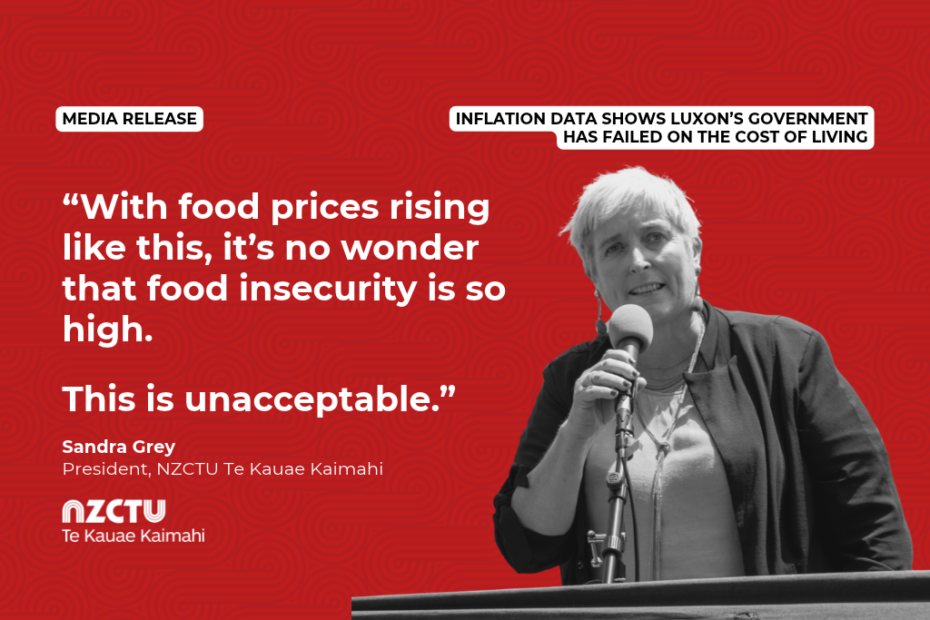
“With food prices rising like this, it’s no wonder that food insecurity is so high. The NZ Food Network reports that 31 percent of households are food insecure this year, including almost half of low-income households. This is unacceptable”, says Grey.
Other essentials have climbed even faster over the last three years: household energy is up 29.2 percent, insurance 19.3 percent, medical services 13.5 percent, and council rates 28.8 percent. Tertiary education is up 34.7 percent.
“Wage growth has fallen well behind these prices, and low-income households are being hit hardest because essentials make up a larger share of their weekly budgets”, says Grey.
To make matters worse, Luxon’s Government has cut the minimum wage in real terms three years running. Full-time minimum wage workers are now more than $2,000 a year worse off than if the minimum wage had been lifted in line with inflation.
“None of Luxon’s choices have helped Kiwis with the cost of living. Public sector layoffs, reduced investment, and cuts to welfare support have only made the cost of living worse. Unemployment has climbed to 5.6 percent and underutilisation to 13.8 percent. People can’t afford the essentials when they can’t get work,” says Grey.
“This quarter’s inflation figures don’t fully capture the recent surge in petrol and diesel prices,” says Grey. “That will push inflation back up in the December quarter and put even more pressure on Kiwi households.” says Grey.
“The Reserve Bank has signalled it will continue increasing interest rates in response to higher inflation – this will further hurt struggling whānau”, says Grey.
“Luxon’s Government promised to get the cost of living under control. It has failed. Don’t risk six years of Luxon,” says Grey.